
As 2025 unfolds, medical malpractice lawyers across the United States face a rapidly evolving landscape of legislative and regulatory changes that directly impact case strategy, client counseling, and settlement dynamics. From stricter informed consent requirements in telemedicine to new mandatory reporting rules and emerging AI standards of care, these updates demand attention from attorneys serving patients harmed by medical negligence.
For the readers of lawyersformedicalmalpractice.top, staying ahead of these changes can mean the difference between a strong claim and one that gets dismissed on procedural grounds.

Informed Consent in the Telemedicine Era
One of the most immediate changes affecting malpractice cases is the expanded focus on informed consent, particularly for telemedicine and digital health platforms.
Key Updates for 2025
- Federal and state telemedicine regulations now mandate more detailed documentation of risks discussed during virtual visits, including limitations of remote diagnosis and when in‑person evaluation is required.
- The Joint Commission and state medical boards have updated accreditation standards requiring providers to document specific telemedicine‑related risks (e.g., poor video quality, delayed response times, inability to perform physical exams).
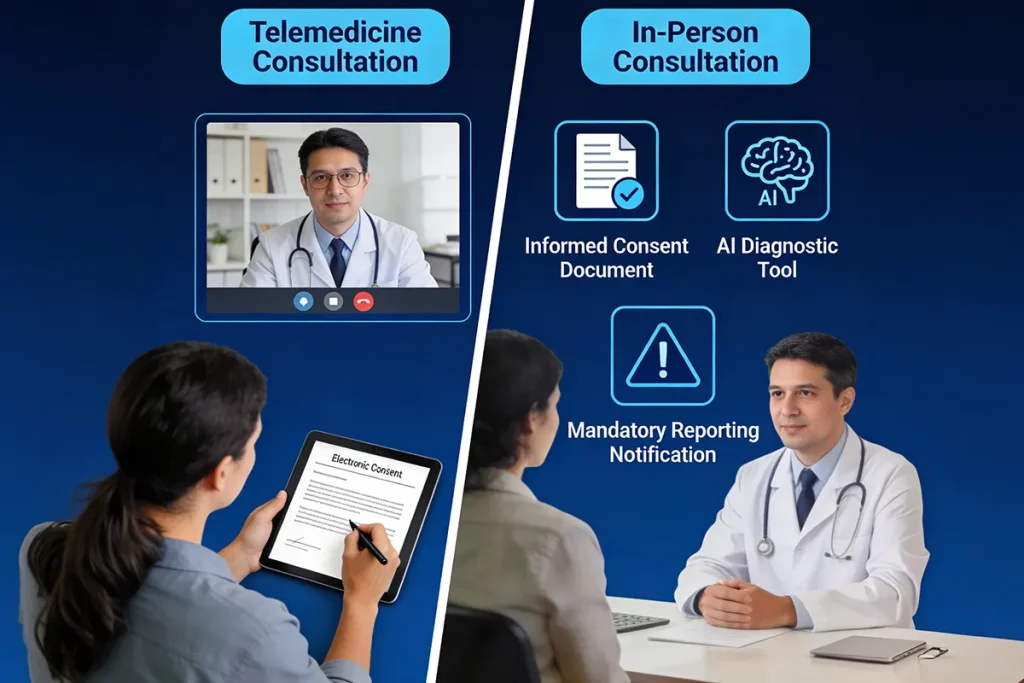
- Several states (including California, New York, and Texas) have passed laws requiring electronic consent forms to include telemedicine disclaimers, with failure to obtain proper consent potentially creating admissibility issues in malpractice trials.
For malpractice attorneys, these rules create new avenues for claims when providers skip or inadequately document telemedicine consents, especially in cases involving delayed diagnoses or inappropriate remote prescriptions. However, they also mean stronger defenses for defendants who can show comprehensive electronic consent records.
Practical Impact for Cases
- Discovery strategy: Request all telemedicine session recordings, chat logs, and electronic consent timestamps.
- Expert testimony: Neurologists, cardiologists, and other specialists increasingly testify that certain conditions (stroke, heart attack) require in‑person evaluation despite telemedicine convenience.
- Settlement leverage: Defendants may settle faster when consent documentation is incomplete, avoiding jury arguments about “cutting corners” during virtual care.
Mandatory Adverse Event Reporting: A Double-Edged Sword
New mandatory reporting requirements for adverse events are rolling out in multiple states and federally, creating both opportunities and challenges for malpractice litigation.
What Changed in 2025
- California’s AB 1355 expands mandatory reporting to include “near misses” in surgical settings, with hospitals required to notify the state within 24 hours of serious events.
- New York and Illinois now require public disclosure of certain preventable adverse events, with patient names redacted but details available through state dashboards.
- Federal CMS rules mandate hospitals report specific “never events” (wrong‑site surgery, retained objects) with penalties for non‑reporting, creating a national database accessible in discovery.
How This Affects Malpractice Cases
- Pattern evidence: Attorneys can now cite multiple similar incidents at the same hospital to argue systemic negligence, strengthening punitive damage claims.
- Spoliation arguments: Failure to report as required can trigger adverse inference instructions, telling juries to assume the hidden evidence was unfavorable to the defendant.
- Defense challenges: Hospitals invest heavily in compliance teams, but incomplete reports remain a vulnerability that skilled plaintiffs’ lawyers can exploit.
For patients, these rules mean greater transparency about hospital safety records. For lawyers, they provide powerful discovery tools but also require staying current on reporting nuances to avoid procedural missteps.
AI and the Emerging “Standard of Care”
Perhaps the most forward‑looking change is the integration of AI into the legal standard of care for medical decisions.
2025 Developments
- AMA and AHA guidelines now state that failure to use FDA‑cleared AI diagnostic tools (e.g., for radiology, ECG analysis) may constitute a breach of standard care in certain settings.
- Texas and Florida passed laws requiring disclosure of AI use in diagnosis and treatment planning, with malpractice implications if AI outputs are ignored or misused.
- A landmark journal article in JAMA proposed a “new legal standard” where courts consider AI performance data alongside human expert testimony in determining negligence.
Litigation Implications
- Expert battles: Malpractice trials now feature AI performance metrics alongside traditional medical testimony, with lawyers arguing whether a doctor’s decision aligned with or ignored AI recommendations.
- Discovery requests: Plaintiffs demand AI system logs, training data, and override records to show if negligence involved ignoring reliable AI alerts.
- Defense strategies: Providers highlight human oversight requirements in AI use, arguing that over‑reliance creates its own risks.
As AI tools proliferate in radiology, cardiology, and triage, malpractice lawyers must master both the technology and the emerging case law to effectively represent clients.
What Malpractice Attorneys Must Do Differently in 2025
These changes demand proactive adaptation:
- Audit your case intake forms to capture telemedicine details and AI use from the outset.
- Build relationships with experts familiar with digital health platforms and AI limitations.
- Monitor state dashboards for adverse event reports tied to specific facilities.
- Update fee agreements to account for potential discovery costs related to electronic records and AI data extraction.
- Venue shop strategically, as reporting and consent rules vary widely by jurisdiction.
For patients harmed by medical negligence, 2025’s regulatory evolution means stronger documentation trails and more accountability tools—but only if your lawyer knows how to use them. At lawyersformedicalmalpractice.top, we connect you with attorneys who stay ahead of these critical developments to maximize your recovery.


