
In 2025, state supreme courts across the U.S. delivered rulings that are reshaping medical malpractice litigation, from expanding hospital liability to challenging longstanding damage caps. These decisions create new opportunities for injured patients while raising the stakes for healthcare providers and their insurers. For medical malpractice lawyers, they signal a shifting legal landscape where strategy, venue selection, and expert preparation matter more than ever.
Key 2025 Rulings Expanding Liability
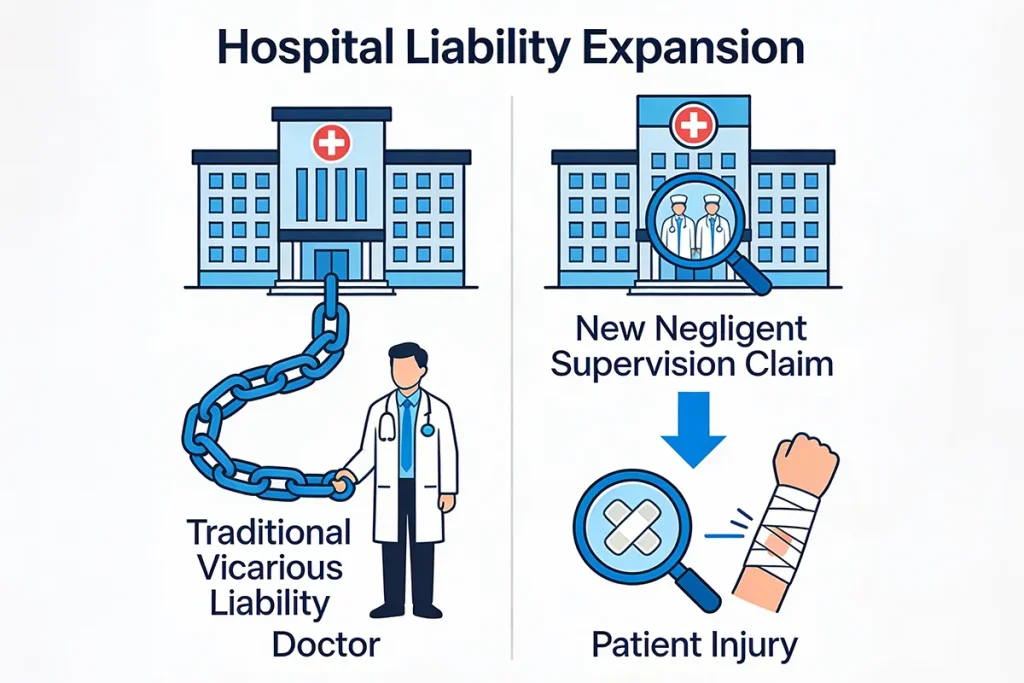
West Virginia: Negligent Supervision Now Viable Against Hospitals
The West Virginia Supreme Court unanimously recognized negligent supervision as a valid claim against healthcare employers, even when an employee’s actions were intentional or reckless. In Camden-Clark Memorial Hospital v. Marietta Area Healthcare, the court outlined the elements: duty to supervise, breach, causation, damages, plus proof of the employee’s tortious act.
This ruling means hospitals can now face third-party lawsuits for failing to properly oversee staff, regardless of whether the underlying conduct was negligent or deliberate. For lawyers, it opens a new avenue to hold institutions accountable beyond traditional vicarious liability.
Texas: Narrowing “Healthcare Liability Claims”
Texas’s Supreme Court in Leibman v. Waldroup (June 2025) ruled 5-4 that not all physician actions qualify as “health care liability claims” under the Texas Medical Liability Act (TMLA). The case involved a doctor writing service animal letters post-treatment, which injured a child when the dog attacked. The court held these claims didn’t require medical expert reports since they weren’t tied to diagnosis or treatment.
This narrows TMLA’s scope, potentially easing procedural hurdles for some negligence suits against doctors outside direct patient care.
Damage Caps Under Fire: Mixed Results
Damage caps on non-economic awards remain a flashpoint, with courts split on constitutionality.
Georgia: Wrongful Death Caps Upheld (For Now)
Georgia’s Supreme Court in Medical Center of Central Georgia v. Turner (June 2025) vacated a lower court’s ruling and remanded for reconsideration of whether the $350,000 non-economic cap applies to wrongful death cases. Citing its 2010 Nestlehutt decision striking caps for pain and suffering, the court clarified Nestlehutt didn’t directly address wrongful death, sending the issue back for fresh analysis.
This procedural win for defendants keeps caps intact pending trial court review, but signals ongoing uncertainty.
Michigan: Supreme Court Sidesteps Challenge
Michigan’s Supreme Court declined to revisit the state’s non-economic damages cap (MCL 600.1483) in a federal certification request from Beaubien v. Trivedi. The cap—$596,400 standard, up to $1,065,000 for catastrophic injuries—stands, rejecting arguments it violates jury trial rights, equal protection, or separation of powers.
Other States: Ongoing Battles
- California: Upheld MICRA reforms allowing gradual cap increases tied to inflation, balancing access with provider stability.
- Florida: Reaffirmed prior stance that caps violate equal protection, maintaining no limits on non-economic damages.
- Midwest (MO, KS): Courts are reevaluating if caps infringe jury roles, with potential for higher payouts ahead.
Practical Impact for Patients and Lawyers
These rulings create a patchwork of liability expansion and cap defenses:
- For Plaintiffs’ Lawyers: West Virginia’s negligent supervision opens institutional targets; Texas narrows procedural barriers. Uncertain caps in states like Georgia reward aggressive venue shopping.
- For Defendants: Caps remain shields in MI, GA (tentatively), but expanding theories like supervision demand robust training, documentation, and insurance reviews.
- Timeline and Costs: Complex rulings prolong discovery as parties litigate applicability, increasing case expenses.
Hospitals must audit supervision policies and contracts, while patients benefit from clearer paths in some jurisdictions. Malpractice lawyers should track appellate developments closely—2025’s decisions could foreshadow 2026 reforms or reversals.
For those harmed by medical negligence, these shifts underscore the value of experienced counsel to navigate state-specific rules and maximize recovery. At lawyersformedicalmalpractice.top, we connect you with attorneys equipped for this evolving battlefield.


